 Codivia
Real IMT exam questions
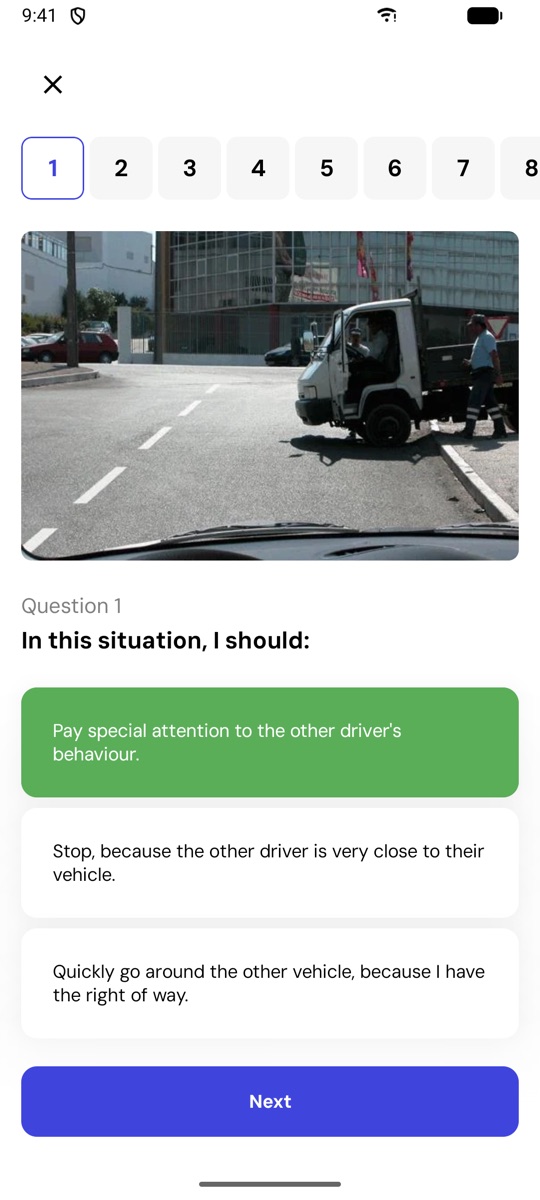
Study with the question lists IMT publishes — original photos, road signs and scenarios, not paraphrased lookalikes.
Codivia is the app for the IMT exam: real IMT exam questions with original images, timed exam simulations, and instant Portuguese ↔ English switching — built for everyone getting a driving licence in Portugal.
Free to start. Study on iPhone and Android.
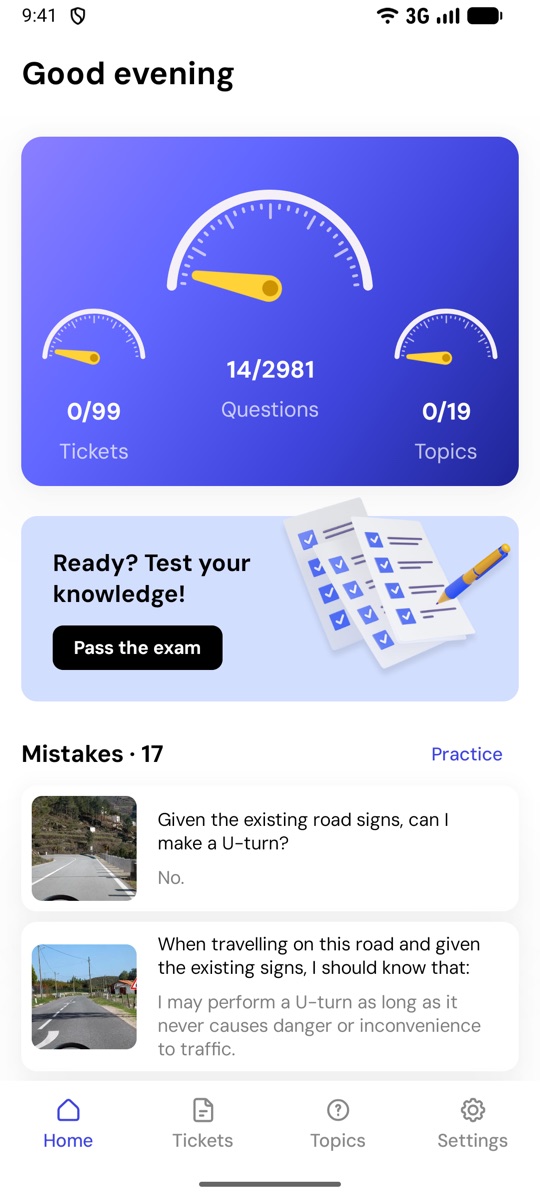
Study with the question lists IMT publishes — original photos, road signs and scenarios, not paraphrased lookalikes.
Every question, answer, topic and ticket in Portuguese and English. Switch instantly, even mid-quiz — no reloading, no separate app.
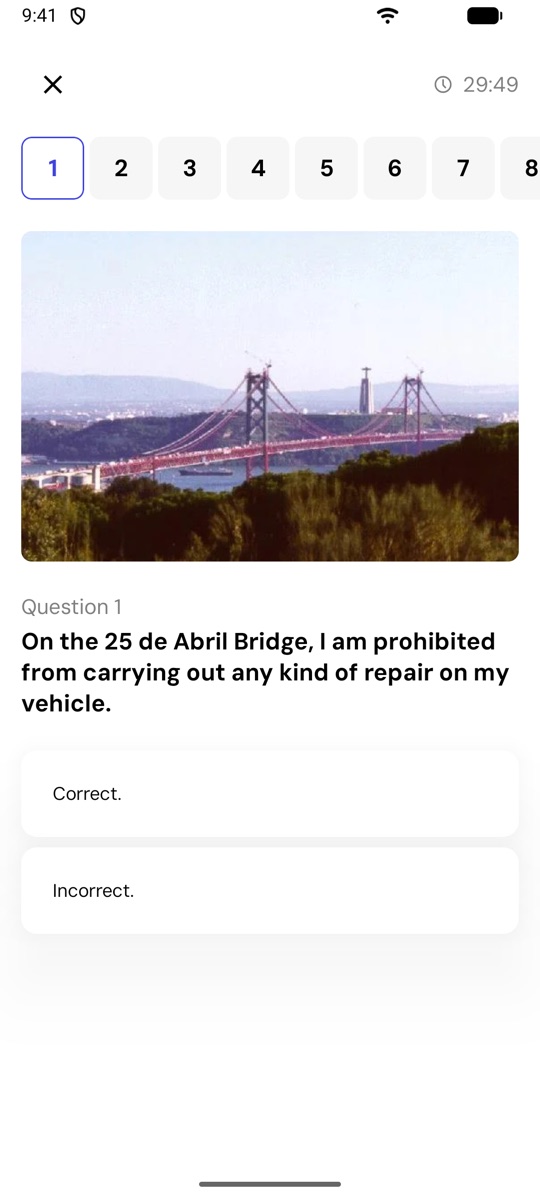
A timed simulation with the real format: 30 questions, 30 minutes. Feel the clock before the day it counts.
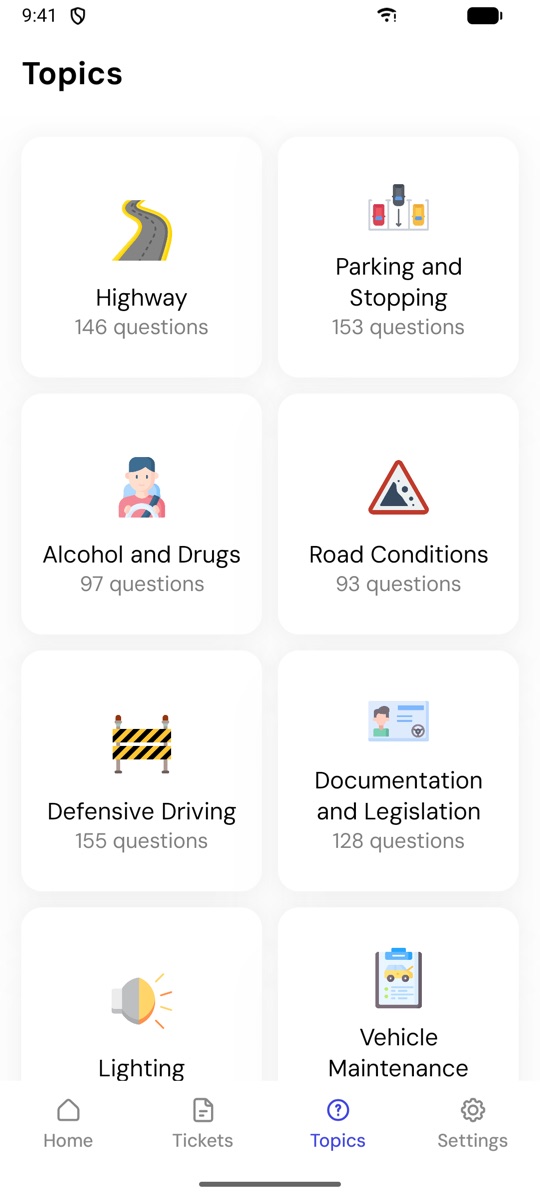
Priority rules, signs, overtaking, alcohol limits — drill one theme of the Portuguese driving theory test at a time until it sticks.
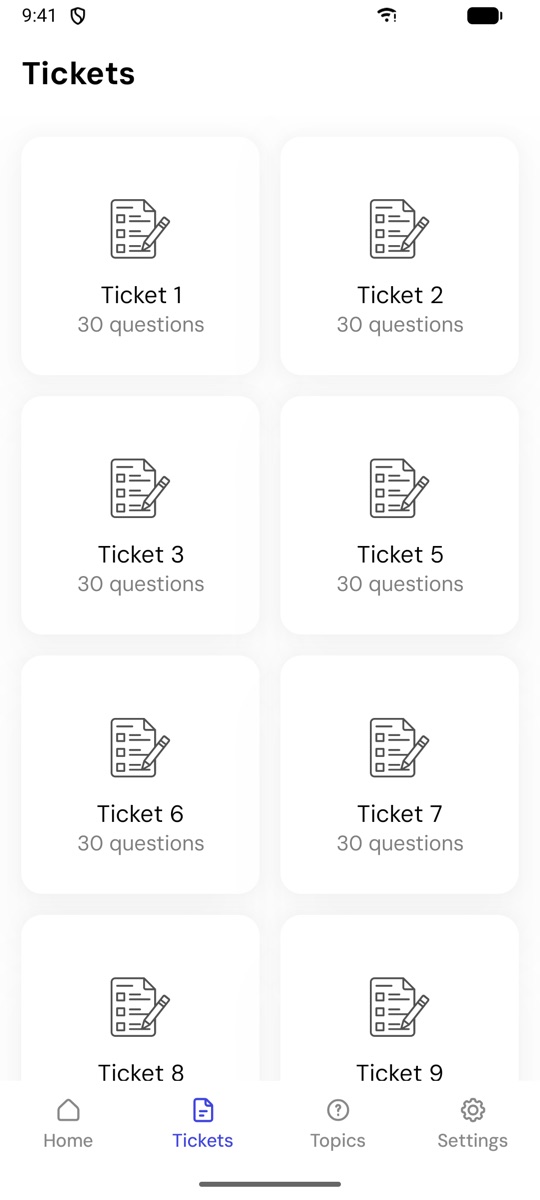
Work through curated tickets that mirror how the exam mixes themes, so nothing surprises you.
After every exam, replay exactly the questions you missed — the fastest way to close the gaps.
The real test allows very little room for error. Exam mode replicates the pressure — the timer, the pacing, the mix of themes — so the actual exam feels like one more practice run.
Taking the IMT theory exam for your first carta de condução? Study the código da estrada in English and check the Portuguese wording whenever you need it.
If your exchange requires the theory test, get up to speed on Portuguese road rules without translating textbooks yourself.
Study in Portuguese and flip to English when a question is worded in a confusing way — the same question, the same images.
It is the theory part of getting a driving licence in Portugal, run by the IMT (Instituto da Mobilidade e dos Transportes). Locally it is known as the exame de código, because it tests your knowledge of the código da estrada — the Portuguese road code.
The exam has 30 questions and lasts 30 minutes. Codivia exam mode uses exactly the same format, so you practise at the real pace.
Yes. Every question, answer, topic and practice ticket in Codivia is available in both English and Portuguese, and you can switch between them at any moment — even in the middle of a quiz.
The questions are based on the public question lists IMT publishes on its website, with the original photos, road signs and scenarios. Codivia is an independent app and is not affiliated with IMT.
Codivia is free to start. Download it on iPhone or Android and begin with your first practice ticket right away.
Yes. Codivia is available for both iOS and Android.
Topics group questions by theme — priority rules, road signs, overtaking, alcohol limits — so you can drill one subject until it sticks. Tickets are curated sets that mix themes the way the real exam does. Exam mode adds the timer on top.
Download Codivia and do your first practice ticket today — in Portuguese, in English, or both.